Mintbrooks may earn a commission when you buy through links on our site.
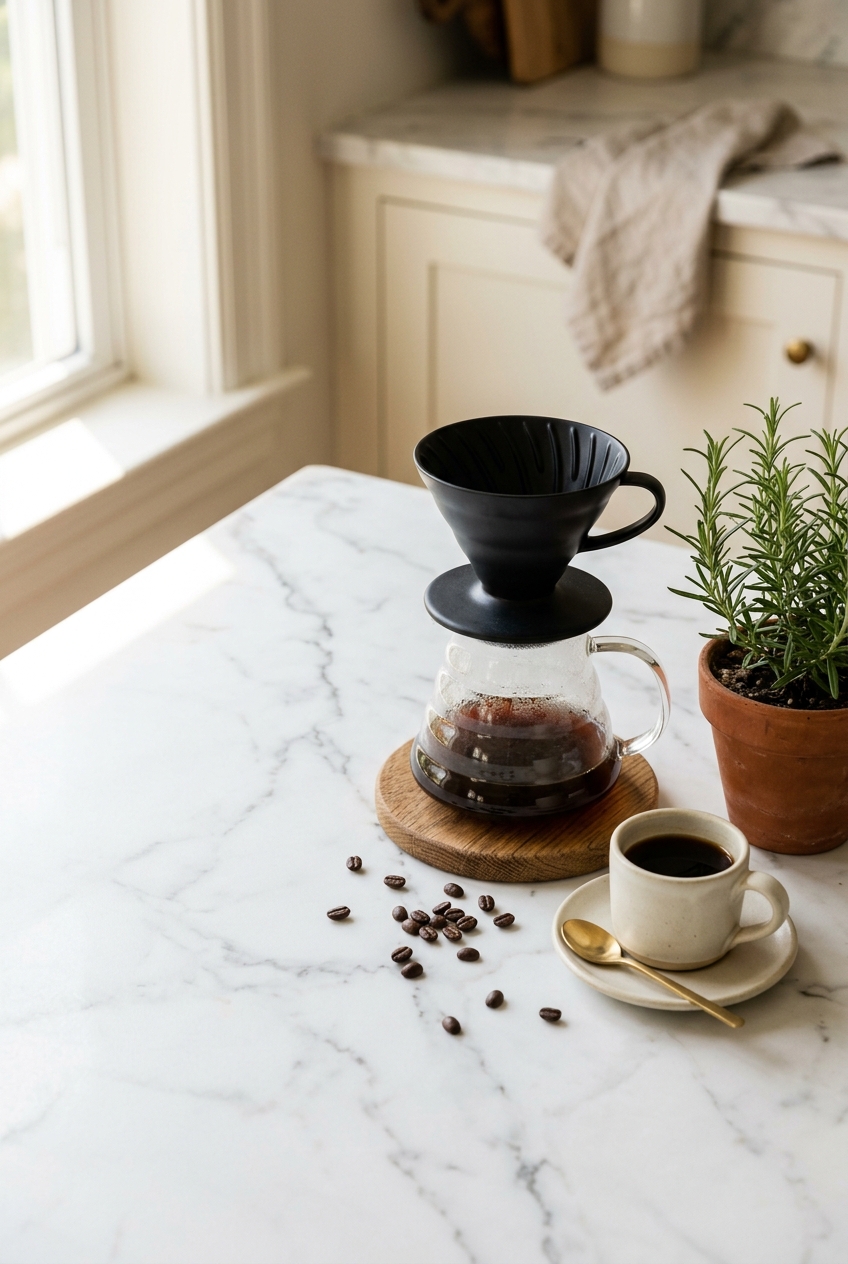
Choosing between pour-over and French press brewing methods comes down to your taste preferences and lifestyle. Pour-over offers a clean, bright cup with nuanced flavors, ideal for those who appreciate clarity and control. French press delivers a full-bodied, rich brew with more sediment, perfect for those who prioritize intensity and a robust mouthfeel. They make genuinely different coffee. Here is which one you will actually prefer.
Taste Profile: Clarity vs. Body
The fundamental difference between pour-over and French press lies in their resulting taste profiles. Pour-over coffee emphasizes clarity, brightness, and the nuanced notes of the bean. The paper filter removes most of the coffee oils and micro-fines, resulting in a clean, crisp cup with a lighter body and a bright acidity. You can discern individual flavor notes—think floral, citrus, or berry—more distinctly. It's often described as an "elevated" coffee experience, allowing the bean's origin and roast to shine through without interference. If you enjoy a delicate, aromatic cup that highlights specific characteristics of single-origin beans, pour-over is your method. It's akin to a well-filtered wine, where every subtle note is present.
French press coffee, conversely, delivers a full-bodied, robust, and often intense cup. The metal mesh filter allows most of the coffee oils and fine sediment to pass into your mug. This creates a rich, heavy mouthfeel and a bolder, more pronounced flavor. You'll notice a longer finish and a deeper, sometimes earthy, flavor profile. While some appreciate the "grit" and complexity this adds, others find it muddy. French press excels with darker roasts or blends designed for a strong, comforting cup. If you prefer a hearty, impactful coffee that lingers on the palate, the French press is likely your preference. It’s like a hearty stew, rich and satisfying.
Pour-over offers a clean, bright cup with nuanced flavors. French press delivers a full-bodied, rich brew with more sediment.
Ease of Use: Speed and Simplicity
The French press is generally simpler to use, especially for beginners. Its process is largely hands-off after the initial setup. You add coarse grounds, hot water, steep, and plunge. There's less technique involved to get a decent cup. A 34-ounce Bodum Chambord French Press, for example, requires minimal fuss. You don't need to worry about pour rate, bloom timing, or precise water distribution. This makes it an excellent choice for mornings when you're still half-asleep or for those who prefer a straightforward approach to their caffeine.
Pour-over, on the other hand, demands more attention and technique. Achieving an excellent pour-over requires a specific grind size, water temperature, bloom phase, and a consistent, circular pouring motion. Tools like the Hario V60 or Chemex require a gooseneck kettle (e.g., Fellow Stagg EKG Electric Pour-Over Kettle, approximately $189) for precise water delivery. The learning curve is steeper, and consistency takes practice. While you can get a drinkable cup quickly, mastering the pour-over to extract its full potential is an art form. This method appeals to those who enjoy the ritual of coffee making and are willing to invest time in perfecting their craft. The reward is a significantly better cup.
Equipment and Costs: Initial Investment and Ongoing Needs
Your initial investment can vary significantly between these two methods. A basic French press setup is typically more affordable. A reputable 34-ounce French press, like the Bodum Chambord, costs around $40-$50. You only need the press itself, a grinder, and a kettle. No specialized filters are required.
Pour-over requires a higher initial investment for optimal results. While a basic Hario V60 dripper can be as little as $20, you'll also need specific paper filters (Hario V60 filters, around $10 for 100), a precise burr grinder (like the Baratza Encore ESP, around $199, for consistent grind size), and crucially, a gooseneck kettle for controlled pouring. A digital scale (Hario Drip Scale, around $59) is also highly recommended for measuring grounds and water accurately. If you opt for a Chemex (Chemex Classic Series 8-Cup Coffeemaker, around $50), you'll need its proprietary, thicker filters (Chemex Bonded Filters, around $12 for 100). The total cost for a quality pour-over setup can easily exceed $300.
Ongoing costs also differ. French press has minimal ongoing costs beyond coffee beans. Pour-over requires a steady supply of specific paper filters, which adds a small but consistent expense over time. For example, using one Hario V60 filter per day adds about $36 annually to your coffee budget.
Pour-over vs. French Press: At a Glance
| Feature | Pour-Over (e.g., Hario V60, Chemex) | French Press (e.g., Bodum Chambord) |
|---|---|---|
| Taste Profile | Clean, bright, nuanced, light body, high clarity. Highlights acidity and specific flavor notes. | Full-bodied, rich, intense, heavy mouthfeel, robust. More sediment and oils. |
| Ease of Use | Higher learning curve, requires technique (pour rate, bloom), more hands-on. | Simpler, mostly hands-off, easier for beginners. |
| Initial Equipment Cost | Moderate to High ($100-$400+ for optimal setup: dripper, gooseneck kettle, scale, grinder). | Low to Moderate ($40-$150 for press and basic grinder). |
| Ongoing Costs | Regular purchase of specific paper filters. | Minimal (no filters needed). |
| Brew Time | 5-8 minutes (active pouring time), plus kettle heating. | 4-5 minutes steep time, plus kettle heating (less active). |
| Cleanup | Relatively easy (dispose of filter, rinse dripper/carafe). | Can be messy (grounds in plunger, more rinsing required). |
| Grind Size | Medium-fine to medium (depending on dripper and desired flow rate). | Coarse. |
| Sediment | Virtually none. | Noticeable. |
| Editors' Pick for Clarity | Hario V60 (plastic for durability, ceramic for heat retention) | N/A |
| Editors' Pick for Body | N/A | Bodum Chambord French Press |
Cleanup and Maintenance: Time and Effort
Cleanup for pour-over is generally simpler and less messy. With a Hario V60 or Chemex, you simply lift out the used paper filter with the spent grounds and discard it. A quick rinse of the dripper and carafe is usually sufficient. There’s no intricate mesh to clean or fine grounds to dislodge. This makes it a very convenient option for busy mornings or when you want a quick post-brew tidy-up.
French press cleanup can be more involved. The metal mesh filter often traps fine grounds, requiring thorough rinsing or even light scrubbing. Disposing of the wet, coarse grounds can also be messier, as they don't always slide out easily. Many users find themselves scraping grounds into the trash or rinsing them down the sink (which can lead to plumbing issues over time). While not overly complicated, it does require a bit more effort and attention than a pour-over setup. If you're averse to dealing with coffee grounds, pour-over wins this round.
Pour-over coffee emphasizes clarity, brightness, and the nuanced notes of the bean.
Brew Time: Patience vs. Immediate Gratification
The total time from start to sip is a critical factor for many. French press generally has a shorter active brew time, though the steeping period adds to the overall waiting. Once your water is hot, you add grounds, pour water, stir, and then wait for 4-5 minutes for steeping. The active involvement is minimal. So, while the steeping time itself is a few minutes, you aren't constantly tending to the brew. This makes it a good option if you want to set it and forget it for a few minutes while you get ready.
Pour-over brewing, while potentially faster in terms of total contact time, demands more active attention throughout the process. After heating your water (which can take 2-4 minutes depending on your kettle), you'll go through a bloom phase (30-45 seconds), followed by several controlled pours over 2-3 minutes. The total pour time for a standard 12-ounce cup might be 3-4 minutes, but it requires your full presence. If you enjoy the meditative aspect of actively brewing your coffee, this isn't a drawback. If you're rushing out the door, those active minutes can feel like an eternity. For example, brewing a 12-ounce cup with a Hario V60 might take 3 minutes of active pouring after a 30-second bloom, plus the 2-3 minutes to heat the water. The total time is similar, but the engagement level is higher.
Versatility and Customization: Beyond the Basics
Pour-over offers extensive opportunities for customization, making it a favorite among coffee enthusiasts and home baristas. You can manipulate numerous variables to fine-tune your brew: grind size, water temperature, pour rate, pour pattern, and total brew time. Each adjustment significantly impacts the final cup. Using different drippers (Hario V60, Chemex, Kalita Wave) also changes the extraction dynamics, offering even more control. For example, the flat bottom of a Kalita Wave results in a more even extraction than the conical Hario V60. This level of control allows you to highlight specific characteristics of different beans, making it highly versatile for exploring the vast world of specialty coffee.
French press, while less customizable in terms of brewing technique, offers versatility in other ways. Its immersion method is excellent for making cold brew coffee. Simply add coarse grounds and cold water, let it steep for 12-24 hours in the refrigerator, and plunge. The large capacity of most French presses makes them ideal for this. You can also use a French press to froth milk (by rapidly plunging warm milk) or even to brew loose-leaf tea. While you can adjust steep time and water temperature, the impact on the flavor profile is less dramatic than with pour-over. Its versatility lies in its ability to handle different types of beverages and its ease of scaling up for larger batches.
Editors' Pick:
- For the Pour-Over Enthusiast: The Hario V60 Ceramic Coffee Dripper (Size 02, ~$30) paired with a Fellow Stagg EKG Electric Pour-Over Kettle (~$189). The V60 offers excellent thermal stability and a wide opening for precise pouring, while the Stagg EKG provides unparalleled temperature control and a perfect pour spout.
- For the French Press Lover: The Bodum Chambord French Press Coffee Maker (34 oz, ~$50). It’s a classic for a reason: durable, aesthetically pleasing, and consistently delivers a rich, full-bodied brew.
FAQ
What is the main difference between pour-over and French press coffee?
The main difference is the filtration method and resulting taste. Pour-over uses a paper filter, yielding a clean, bright cup with clarity. French press uses a metal mesh filter, allowing oils and sediment through for a full-bodied, rich, and intense cup.
Which method is easier for beginners?
The French press is generally easier for beginners. It involves fewer variables and less active technique compared to the precise pouring required for a good pour-over.
Do I need special equipment for pour-over coffee?
For optimal pour-over results, you'll need a dripper (like a Hario V60 or Chemex), specific paper filters, a gooseneck kettle for controlled pouring, and ideally a digital scale and a burr grinder for consistent grind size.
Can I make cold brew with a pour-over?
While technically possible, pour-over is not ideal for cold brew. Cold brew relies on immersion over a long period, which a French press is perfectly designed for. Pour-over extracts quickly with hot water.
Which method produces coffee with more caffeine?
Caffeine content is primarily determined by the bean type, roast level, and coffee-to-water ratio. However, French press coffee, due to its longer immersion time and allowing more solids through, can sometimes deliver a slightly higher caffeine punch per serving compared to pour-over, given the same coffee and ratio. This is not a universal rule, though.
Is one method healthier than the other?
Some studies suggest that unfiltered coffee (like French press) can raise LDL cholesterol due to diterpenes (cafestol and kahweol). Paper filters in pour-over coffee largely remove these compounds. If cholesterol is a concern, pour-over might be a healthier choice. However, for most people, the difference is negligible in moderation.
Final Verdict
The choice between pour-over and French press hinges on your priorities. If you crave a clean, bright, nuanced cup that highlights the intricate flavors of specialty beans, and you enjoy the ritual of precise brewing, invest in a pour-over setup. Expect to spend more time and money initially, but gain unparalleled control over your coffee. If you prefer a robust, full-bodied, rich cup with minimal fuss and a forgiving brewing process, the French press is your ideal companion. It's more budget-friendly and simpler to master, delivering consistent results with less effort. Both methods yield excellent coffee; the "better" one is simply the one that aligns with your taste and lifestyle.